

Compressor Keeps Stopping? Common Overheating & Electrical Causes
An air compressor that stops unexpectedly is typically responding to an internal safety condition rather than a random fault. Most modern industrial compressors, particularly rotary screw models, are designed to shut down automatically when overheating or electrical irregularities are detected, preventing permanent damage to critical components. Identifying the underlying cause is essential to restoring reliable operation and avoiding unnecessary downtime.
This article explains the most common thermal and electrical reasons for repeated compressor shutdowns, with practical guidance relevant to UK industrial environments, and outlines how professional servicing support from Anglian Compressors can assist in diagnosing and preventing recurring issues.
Why Does My Air Compressor Keep Stopping?
It is frustrating when your air compressor stops unexpectedly. It halts production and can lead to costly downtime. However, these shutdowns are triggered by programmed safety thresholds rather than random errors.
Most modern compressors, especially rotary screw air compressors found in UK industry, are designed to protect themselves. If the system detects that the motor is working too hard or the machine is getting too hot, it will shut down automatically. This prevents permanent damage to the expensive components inside.
Understanding why this happens is the first step to fixing it. Usually, the culprit is either excess heat or an electrical issue.
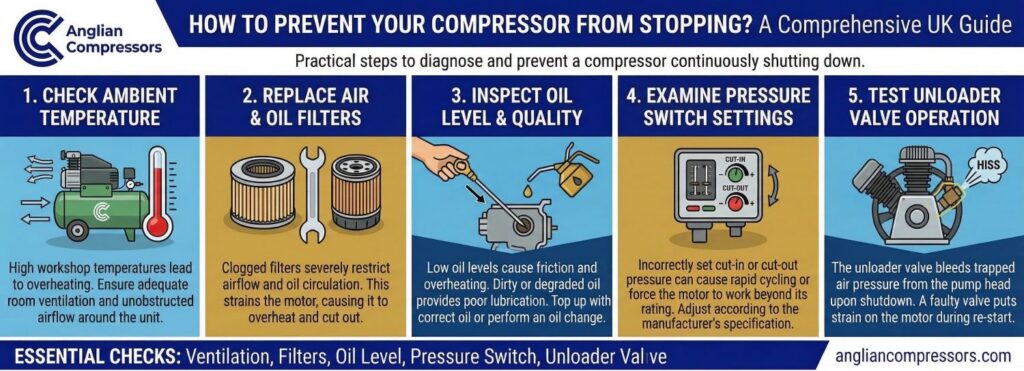
Understanding Compressor Overheating
Heat is the biggest enemy of compressed air equipment. Compressing air generates a significant amount of heat naturally. If the cooling system cannot remove this heat fast enough, the internal temperature rises.
Most systems, such as the Atlas Copco GA series, operate within manufacturer-defined shutdown thresholds. If the temperature goes above a warning limit (often around 110°C), the controller will alert the operator. If it climbs higher, the machine stops to protect the oil and the metal components.
One way to manage this heat is by installing heat recovery systems. These systems capture the waste heat and use it to warm water or air in your facility, turning a potential problem into an energy-saving benefit.
Blocked Coolers and Airflow Issues
The most common cause of overheating is simple: dust. In busy workshops and factories, airborne dust is pulled into the compressor.
Over time, this dust coats the oil cooler and radiator. This build-up creates a layer of thermal insulation inside the machine. Even if the fan is spinning, the air cannot pass through the matrix to cool the oil. Regular cleaning is essential to maintain effective heat exchange.
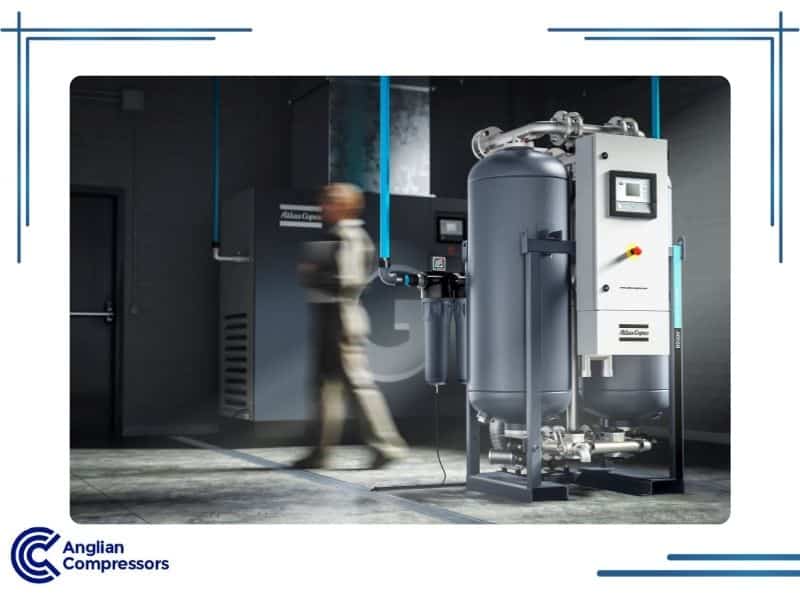
Ventilation in the Compressor Room
Sometimes the machine is fine, but the room is the problem. Poor ventilation leads to a clear cause-and-effect sequence that results in a shutdown.
If fresh air cannot enter or hot air is not extracted, the compressor ingests its own exhaust. This recirculation causes the intake temperature to rise, which reduces cooling efficiency. Consequently, the internal temperature spirals upwards until the safety threshold is breached.
Good ventilation design ensures cool fresh air can enter and hot air is ducted away. This simple step improves reliability and efficiency. You can read more about getting this setup right in A UK Guide to Designing an Air Compressor Room for Reliability, Safety, and Efficiency.
Oil and Filter Problems
Compressor oil performs three critical functions: lubrication, heat transfer, and contamination control. If the oil level is low, there is insufficient fluid volume to carry the generated heat away from the element.
Old oil loses its ability to handle heat, and varnish can build up inside the system. Additionally, if the oil filter or separator is blocked, the oil cannot circulate freely. This forces the compressor to work harder and generate excess heat.
Keeping up with filter changes is a basic but vital part of avoiding shutdowns. For a broader look at parts that wear out, read about Common Air Compressor Failures and How to Prevent Them.
Electrical Causes for Shutdowns
It is important to distinguish between the types of stops. Electrical faults typically trigger instantaneous trips, whereas thermal issues result in gradual shutdowns.
Compressors need a steady, balanced power supply. If the voltage from your mains supply fluctuates, or if there is an imbalance between the phases, the motor current will spike.
The overload relay detects this spike and cuts the power immediately to save the motor. Loose wires in the isolator or distribution board can also cause resistance and heat, leading to intermittent trips.
Variable Speed Drive (VSD) Sensitivity
A variable speed drive (VSD) air compressor is excellent for energy efficiency. However, the drive components are highly sensitive to dust ingress, heat, and restricted airflow within the control cabinet.
The drive has its own cooling fans and vents. If these get blocked by dust, the drive unit itself can overheat, even if the main motor is cool. Ensuring the electrical cabinet filters are clean is just as important as cleaning the main coolers.
Preventing Stops with Routine Maintenance
Routine maintenance directly prevents the conditions that trigger safety stops. By following a strict schedule, you can address thermal and electrical risks before they cause downtime.
Daily and Weekly Checks
- Check the oil level and top up if needed.
- Look at the display for any early warning messages.
- Make sure the room is not too hot and vents are clear.
Long-Term Care
- Schedule regular professional servicing to change filters and oil.
- Have an engineer check electrical connections for tightness.
- Conduct a leak detection survey. Leaks force your compressor to run longer and hotter than necessary; fixing them reduces the load.
Safety First
Always remember that compressors use high voltage and high pressure. Whether it is following UK regulations or manufacturer guidelines, safety is paramount.
Never try to open panels or adjust components while the machine is running or live. If you are unsure about an electrical or pressure fault, it is always safer to call a professional.
Monitoring Your System
You don’t always have to be in the room to know there is a problem. Modern technology can watch the machine for you.
Systems like SMARTLINK track temperatures and motor currents 24/7. They can spot a rising temperature trend days before it causes a shutdown, allowing you to plan maintenance rather than react to a breakdown. Learn more in our guide to Air Compressor Monitoring Systems and Predictive Maintenance Alerts.
Conclusion
When your compressor stops, it is usually the result of an unmanaged thermal or electrical condition. It might be a blocked cooler, a hot room, or a loose wire.
By keeping the machine clean, well-ventilated, and regularly serviced, you can avoid these interruptions. This keeps your production running smoothly and extends the life of your equipment.
If your compressor is frequently stopping or showing error codes, our team is here to help. Contact Anglian Compressors for expert advice and support across East Anglia and the Midlands.