

How to Winter-Proof Your Compressed Air System and Prevent Costly Downtime
Cold winter temperatures can be hazardous to your compressed air system, as they can freeze condensate, thicken oil, and damage components, leading to equipment failure and costly production downtime. That’s why we created this guide, to provide a checklist of steps to winterproof your compressed air system and help protect your equipment and operational reliability.
The Need for Winter Preparation
The way compressed air systems are designed makes them vulnerable to cold, damp conditions, and heading into winter without preparation is an unnecessary risk. For businesses that rely on compressed air, proactive maintenance is essential to continuity, or you may face unplanned shutdowns.
Winter Risks for Compressed Air Systems
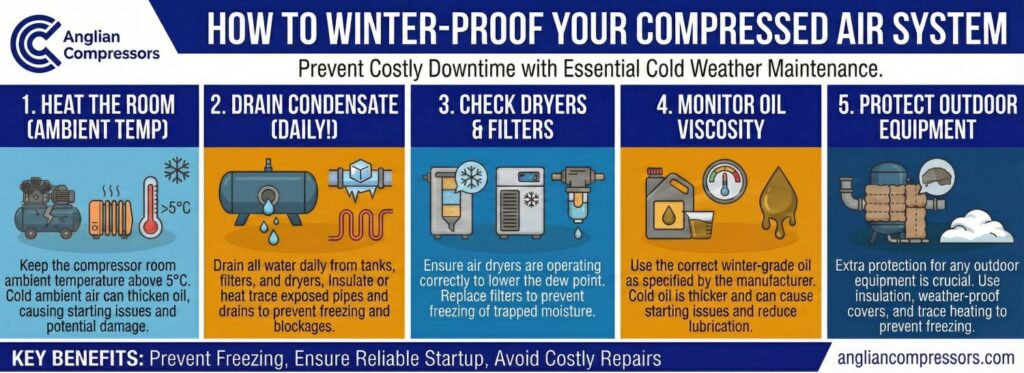
Most compressors are designed to operate comfortably above 5°C, but anything below this temperature takes your system into the high-risk zone.
Frozen Condensate
Air compression creates water vapour, or condensate, and that’s a normal part of how your air compressor operates. But, in winter, this moisture can freeze, and that ice will expand, causing:
- Blocked drain lines, pipes, and control lines, causing pressure drops.
- Cracked components, such as heat exchangers and filter bowls.
- The air supply to stop to downstream equipment.
Oil Viscosity Issues
Low temperatures will cause your compressor oil to thicken, leading to damage and inefficiency:
- Poor Lubrication – Thick oil circulates poorly on start-up, causing accelerated wear on moving parts.
- Motor Strain – The motor must work harder to turn over with thicker oil, drawing a higher amperage, which can trip breakers and lead to motor burnout.
Brittle Components and Air Leaks
Rubber components, such as seals, gaskets, and hoses, lose flexibility in cold temperatures, becoming brittle and more likely to crack under normal pressure. These cracks are a common cause of air leaks, which can waste up to 30% of the air your compressor generates, forcing the system to work even harder.
Our Air Compressor Winter-Proofing Checklist
1. Manage Your Compressor Room
Control the environment in your compressor room, and keep the temperature above 7°C.
- Heating and Insulation – Use thermostatically controlled heaters, ensure the room is insulated and seal any drafts.
- Smart Ventilation – Manage your ventilation by using adjustable louvres to control the outside air intake, so you can provide the necessary cooling without introducing any cold drafts.
- Heat Recovery – Heat recovery systems capture waste heat from your compressor, which can be reused for space heating in the compressor room or other work areas.
2. Protect Your External Pipework
Components located outdoors or in unheated areas are the most vulnerable to cold.
- Insulation – Insulate all of your external pipework and air receivers with materials such as foam rubber or fibreglass.
- Heat Tracing – Apply heat tracing, electrically heated cables wrapped around pipes, to critical sections of your pipework, to ensure optimal performance by keeping temperatures above freezing.
3. Control Moisture
Make removing water from your system a top priority.
- Drain Management – Inspect all of your condensate drains weekly, or daily, during cold spells, and test your automatic drains as well as manually draining your receiver tanks after every shift.
- Choose the Right Dryer – Installing the correct air dryer for your system is essential.
- Refrigerated Air Dryers – These cool the air to a dew point of +3 °C and are only suitable for systems with all of their pipework located inside a heated facility.
- Desiccant Air Dryers – These use adsorbent material to achieve a very low dew point (down to -70°C), and are necessary for any system with outdoor pipework.
4. Optimise Your Lubricants
Standard mineral oils are not designed for low temperatures.
- Switch to Synthetic Oil – Full synthetic oils maintain a stable viscosity in both cold and hot temperatures, ensuring proper lubrication on start-up and reducing motor strain.
- Check for Contamination – Check the oil sight glass and look for a “milky” appearance to the oil, which indicates there is water contamination, making your oil a poor lubricant and causing corrosion to your components.
How to Thaw a Frozen System
If your system freezes, follow a clear plan to prevent damage.
- Safety First: Shut down power at the main isolator and fully depressurise your system.
- Inspect for Damage: Look for cracks in filter housings, pipes, and drain valves.
- Warm the Area Gradually: Use portable electric heaters to warm the area gently. Never use a direct flame or torch.
- Target Frozen Components: Apply gentle, indirect heat from a heat gun to specific parts.
- Warm the Oil: Use a heater to warm the compressor’s sump until the oil reaches a minimum temperature of 21°C.
- Restart and Monitor: After thawing, reset any alarms, restore power, and restart. Inspect the system for new leaks or noises.
UK Compliance and Safety
Winterproofing your compressed air system is also a matter of regulatory compliance.
- PUWER 1998: These regulations require employers to mitigate the hazards caused by freezing equipment.
- COSHH: These regulations are relevant for the safe handling and disposal of condensate.
- ISO 8573-1: This air quality standard is crucial in industries such as food and beverage. The increased volume of condensation generated in winter raises your contamination risks, making oil-free compressors a vital consideration.
Working With a Service Partner
While in-house checks are essential when preparing your compressed air system for winter, partnering with a specialist offers the most effective defence against the cold. An effective service provider like Anglian Compressors, a Branch of Atlas Copco Compressors, has the experience and diagnostic tools necessary to prepare your systems for winter.
Our preventative maintenance plans will ensure your system is optimised before the first frost and, as a premier Atlas Copco partner, we can implement modern monitoring systems, such as SMARTLINK, to provide predictive alerts to stop faults before they develop.
Our specialised winterproofing services include:
- Comprehensive pre-winter system audits.
- Ultrasonic leak detection and repair.
- Professional oil analysis and replacement.
- 24/7 emergency call-out support.
- An extensive hire fleet for emergency backup.
Don’t wait for the first frost to expose weaknesses in your compressed air system. Book your pre-winter system audit with Anglian Compressors, a Branch of Atlas Copco Compressors, today and ensure your operations run efficiently throughout the winter.
Frequently Asked Questions
Can air compressors run in freezing temperatures?
Standard compressors are not designed to run below 0°C without modification, and the main risks low temperatures pose are frozen condensate and thickening of your oil. The safest method of operating your system is to keep the compressor room heated to above 5-7°C.
How do I stop my compressor lines from freezing?
The best way to prevent compressor lines from freezing is to install a desiccant air dryer to remove moisture and to use insulation and electrical heat tracing to protect exposed pipework from cold temperatures.